Maybe it is All About Just Showing up and Being Friendly
Maybe they’ve stumbled onto the simplest life hack there is for loneliness – become a regular somewhere. Exist in a space where people expect you to be and then be friendly while you’re there.
Maybe they’ve stumbled onto the simplest life hack there is for loneliness – become a regular somewhere. Exist in a space where people expect you to be and then be friendly while you’re there.

If we consider what has changed for kids over the last couple of decades, the issues are similar. Kids don’t wander around our communities on their own anymore. We’ve decided that was too dangerous. Outside organized sports, there aren’t many places where teens can socialize offline.
Naturally, in a world where they no longer had access to peers outside of school, they turned to the internet. Phones and social media were the fallback for connecting. Now, however, many find that the option has been taken away as well.

I could not heal until I unlearned that my abuse was something I somehow caused. Unlearning that opened up the possibility of learning something different, namely, that I was abused because someone decided to abuse me. Did that happen overnight? Of course not! Unlearning is a process, and the more closely we identify with a belief, the more difficult it becomes to unlearn it. So many survivors learn at a very early age to keep secrets, that bad things will happen if they tell anyone.
People who’ve never had that belief drilled into their young minds wonder why victims wait decades to come forward and tell their stories. That’s why! That belief is hard to unlearn. Many of us grew up with silence being the thing that prevents the abuse from being worse. Why should we start discussing it? If you tried to tell someone as a child and got shut down, this only gets worse.
It’s heartbreaking to me. It’s overwhelming to consider what’s missing because we haven’t figured out a way to help those who need it the most. The loss is incalculable. I have no words to describe it. I can personalize it because I was someone at risk. I know what would be missing if I had lost that battle. I’d be missing from everything that has happened in the 30 years since. I don’t like to think about that. I can’t imagine a world where I never met my wife or many of the incredibly special people I’ve come to know over the years. I’m fortunate that it isn’t the real world, but I’m also aware of how easily it could have been. I was able to get help. I found support when needed. It wasn’t perfect, but it was enough to keep me connected to life and other people.
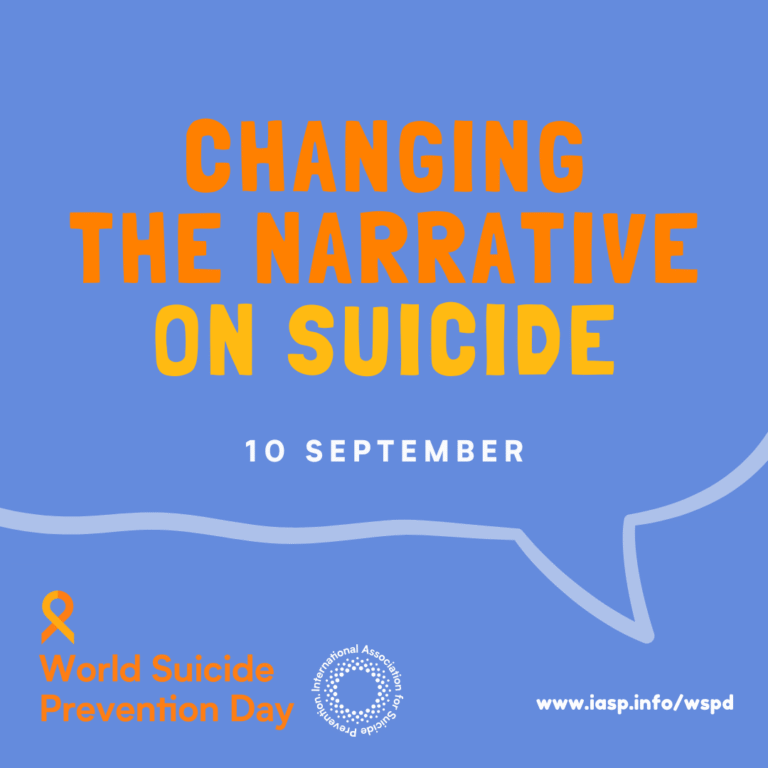
Please, learn about suicide prevention. Ensure that you and everyone you care about are aware of the 988 number and other local resources available to you. Learn about how you can “Change the Narrative” this year at the WSPD link above.

What’s objectionable? Who decides that? Does an abusive parent get to decide that no one should provide any information about abuse to their kid? Do ultra-religious parents get to decide that no one should see information about LGBTQ issues or mental health medication? Do non-religious parents get to decide that no one is allowed to read the Bible online due to violent passages?
It appears the answer to that, at least until a court steps in to strike down this law, is yes to all of that. As the EFF points out, this isn’t just a risk to the big tech platforms. Anyone with a blog, website, social media account, etc., is subject to a civil lawsuit based on a parent not agreeing with what they post.
More importantly, though, is to understand what we say to each other because, as someone who was abused as a child and dealt with severe depression for years, I know what it’s like when people around you see you as less-than. I know what it feels like to feel that way internally, and that is part of the abuse and depression, but it was also part of society that told me that. The part that got uncomfortable any time I was around, or who gets on podcasts and blogs to talk about the damaged goods that abuse survivors are, or mocks “crazy people.” The solution to that is not to find another group that you consider to be beneath you; it’s to see the value in every life. To recognize the humanity in all of us and make political decisions that lift the humanity in all of us.
Subscribe to our Newsletter
See a sample before subscribing here
If you’d rather use RSS – that feed is here.