
Quick Thought #21 – Stark Differences in How I Talk To MyselfPin

Quick Thought #21 – Stark Differences in How I Talk To Myself

I haven’t done one of these quick thought posts in a while, but last night was a great example of how poorly I talk to myself compared to how I talk to others.

Last night, I ordered dinner for my wife and I with an app. It’s an app I’ve used many times, like many others.

I failed to notice that the restaurant only offered pickup until we sat around, wondering why I hadn’t received any notification that our food was on the way. It had been sitting there, getting cold, waiting for us to pick it up for at least 20-25 minutes. We quickly hopped in the car to get it; all the while, I apologized over and over to my wife, berated myself internally for not noticing and screwing up our dinner, etc.

When we got there, I ran inside only to discover that the restaurant had only one meal, not two. Part of the order had gotten cut off, and no one caught it until I got there and asked about the second meal. The manager made things right very quickly, apologizing repeatedly.

My response?

“No worries, it’s all good. We’ve got our food, and that’s all that matters.”

And then I got back in the car, telling myself that this whole mess could have been avoided if I had handled ordering correctly in the first place.

What is wrong with me?

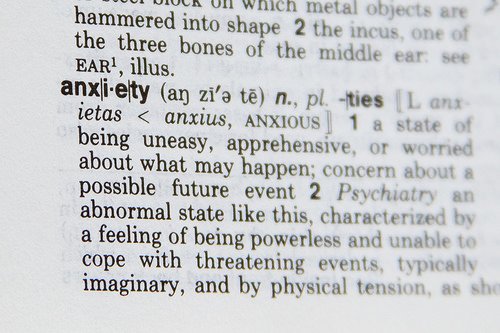
This is life with anxiety. This is what it’s like to struggle with ever feeling like you’re enough. If you’ve done something similar, I see you.

Similar Posts

  • You Can Still Smile, Even Wearing a Mask

    I’ve seen many people in the Mental Health Advocacy arena talking about this new reality of people wearing masks in public places. The main concern seems to be losing something that is small, but can be invaluable, the connection that comes from smiling at someone in public. Now, I don’t want to dispute the importance…

  • Quick Thought #14 – When it’s Someone You Know, You Know.

    Why do I see these two things as related? Well. let’s start with Sean Astin. It’s hard not to think that he has lived an amazingly privileged life. He’s been famous since he was a little kid, after growing up part of Hollywood royalty. If anyone has the means to shelter himself away from the harder topics of life, he’s one of those people. But he chooses not to, because he’s seen first hand what it is like to life with, and love someone with, mental health issues. That experience drives him to advocacy. He wants to share what it was like, and help others watching a mental health condition tear apart their own family.

    In short, he gets it because he knows.

    The same seems to be true when it comes to how serious COVID-19 really is. It seems to me there are a lot of people thinking it’s not very serious because well, no one they know has died or anything serious. 130,000 “other people” have died in the US. On the other hand, there are those of us who do know people who’ve died, or spent time hospitalized, tend to take it very seriously. Because we know. We’ve seen it. We’ve grieved because of it.

  • |

    We All Have Mental Health Issues

    Imagine frowning upon someone taking ibuprofen for a headache because they should “tough it out.” Or talking about how the common cold affects people “over there” and not your group. 

    It’s nonsense. Yet, when it comes to talking about mental health, people start that same nonsense as if they have never had a day where they struggle with anxiety or need to take a break from the stress of day-to-day life. 

    I think it’s time we started looking at mental health the way Dr. Lee describes it. We all have mental health issues of some form or another, just like we all have different physical ailments at times. Stigmatizing people who need mental healthcare and being unable to provide it is a failure for all of us. 

  • What We Really Need is Compassion

    I see this a lot in our communities as well. Again, empathy when dealing with an individual child, or supporting a loved one with a mental health struggle is great, but trying to feel the pain of all of the abuse survivors we are likely to come across in the world online, is a sure way to overwhelm yourself and burn out. I’ve seen it over and over again. Much like COVID-19, these issues are global, and huge. Trying to take on that much pain is an impossible task, and isn’t actually going to be helpful. Much better, is to develop compassion. As the guests on the show discuss, compassionate emotions push us to act. That act, helping others, does more good for them, but is also good for us. Instead of feeling overwhelmed, and shutting down, we are taking some small amount of control over the situation, and acting on it in a way to helps. We become the helpers that Mr. Rogers so famously talked about. Being a helper, makes us happier. It sets aside our own anxiety and struggle to do something, which is always a good way to move beyond those things.

    So, the question may be not only what are you doing to take care of yourself during this time of great anxiety, but what are you doing to help others?

  • Be Aware of Self-Soothing Behaviors During Coronavirus

    As we live through fairly unprecedented times and find ourselves understanding why the old phrase “May you live in interesting times” was actually a curse, it has become commonplace for folks to say quite a number of things that seem rather out of place. I don’t mean expressing anxiety or struggle, but things that are…

Leave a Reply

Your email address will not be published. Required fields are marked *

This site uses Akismet to reduce spam. Learn how your comment data is processed.

To respond on your own website, enter the URL of your response which should contain a link to this post's permalink URL. Your response will then appear (possibly after moderation) on this page. Want to update or remove your response? Update or delete your post and re-enter your post's URL again. (Find out more about Webmentions.)