
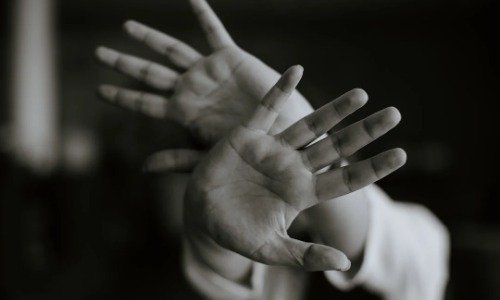
Quote about stigma at two levelsPin

Quote about stigma at two levels

In the book Everything is Tuberculosis by John Green, he makes a statement about stigma that felt like the most succinct description I’ve heard of something I’ve talked about with much less clarity.

When talking about the stigma that was historically associated with illnesses like TB, he said:

Stigma is saying that you deserved to have this happen, but implied within the stigma is also “and I don’t deserve it, so I don’t need to worry about it happening to me.”

He calls this the double burden of not only being sick, but being blamed for the illness.

Survivors know this kind of stigma all too well. Usually, it comes in the form of questions like:

  • Why didn’t you fight back?
  • Why didn’t you leave?
  • Why were you there?
  • Were you drinking?
  • Are you sure that’s what happened?
  • Did you confuse them?

Those of us who have struggled with mental health issues have heard others:

  • What do you have to be depressed about?
  • You just need exercise/sleep/etc.
  • You should be more positive

There are many other statements. They are all designed to do one thing: make the person saying them feel safer.

If I could tell every survivor one thing, it is that these statements were never about us. They were about them and their inability to live with any uncomfortable thought. The narrative that suggests, not out loud but through innuendo and questions, that we deserved what happened is really a narrative that says, “I need to find a reason this won’t happen to me,” because they are too weak to accept that life comes with risks. They need a reason to push the truth away.

People get sick because the world has illnesses. People get abused because the world has abusers in it. People are victimized because the world has victimizers.

The world is not, has never been, and will never be fair. Suggesting that anyone deserved illness or abuse because bad things happen to bad people is naïve. It’s a childish lie we coddle ourselves with, with no basis in reality. Survivors deserve better support than that.
 

Similar Posts

  • Social Network for Survivors and Supporters

    I’ve been spending some time coming up with this, and I think it’s finally ready to be unveiled. I’ve created a Social Network just for Survivors, and the folks who are trying to support and love survivors. To quote the “why” from the site: You may be asking yourself why create another social networking site?…

  • Sad News – The loss of a mental health advocate and friend

    It’s been some time since I was a guest on her show, and it’d even been a few months since we talked, so it wasn’t until today that I learned about the loss of Tiffany Werhner earlier this week. To say that I was shocked, and saddened, doesn’t even come close to what I’m really feeling today.

  • Why Reading Just The Headline is Misleading

    The content of the article is pretty accurate, but if you saw the article shared on Twitter, for example, with just the headline, what would your take-away be? Oh, the headline? This is what it said:

    “If this happened to you in childhood, you may have mental health problems”

    That headline seems to imply the exact opposite of the content of the article. The study they are reporting on, actually says the opposite of that. It implies that we really don’t know or understand all of the causes of mental health issues. For some, it may be tied to childhood trauma, for another person it may be tied to something else, or someone with a lot of childhood trauma didn’t grow up with mental health issues. 

    Since we know many, many people only read the headline and then either move on, or share based on the headline alone. I can’t help but wonder how many people are sharing something, assuming that it says that childhood trauma causes mental health issues, when the article actually says it’s more complicated than that. 

  • A Recurring Theme

    One of the recurring themes I noticed in the holiday edition of the Blog Carnival was in the area of how to deal with the holidays as a survivor. More than one post talked specifically about making new traditions. It’s very easy to regret the Christmas traditions that we either didn’t have, or were not…

  • |

    Confirmation Bias

    The other day I was doing some reading about “confirmation bias”, our natural tendency to process information in ways that agree with what we already believe to be true, and ignoring information that challenges those beliefs. We see this frequently when it comes to politics, for example. People who lean one way or another on…

Leave a Reply

Your email address will not be published. Required fields are marked *

This site uses Akismet to reduce spam. Learn how your comment data is processed.

To respond on your own website, enter the URL of your response which should contain a link to this post's permalink URL. Your response will then appear (possibly after moderation) on this page. Want to update or remove your response? Update or delete your post and re-enter your post's URL again. (Find out more about Webmentions.)