
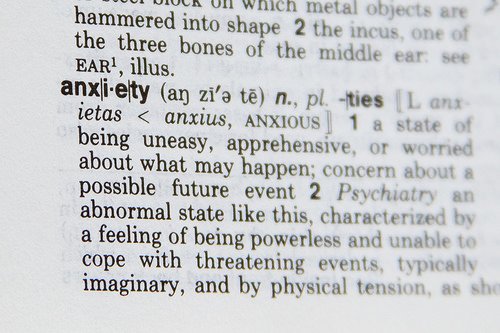
When Trauma Response are Helpful – And When They Aren’t.Pin

When Trauma Response are Helpful – And When They Aren’t.

A few years back, I was having a conversation with a coworker in the wake of a larger meeting we had with the whole team and I was sharing some of my thoughts on what was going on with the team and individual responses to the meeting. I had a lot of things to share that I noticed or was able to infer from the way people interacted or asked questions, etc. He was a bit shocked and commented about how deeply I pay attention and think about other people at work, much more than he was used to.

I suppose he meant it as a compliment. I think he was even trying to suggest that I cared about my peers more than other people usually do.

He was wrong, of course. 😉

It’s not that I didn’t care about my peers, it was just not as much as I was getting credit for. What he didn’t realize was that, as a trauma survivor, when I find myself in a situation that is uncertain, for example when a major change is being introduced to the team at work, or there’s a difficult conversation to be had, I go into hypervigilant mode. The only way my trauma-scarred psyche can even exist in that situation is to try and see all of the threats before they’re coming at me. So I am constantly scanning the environment, reading vocal tone, facial expressions, and body language for what people are really thinking.

That means I am more likely to notice someone feeling angry or anxious without the need for them to say that. That’s not such a bad thing. The downside is that I could overreact to small signs as well. Someone on a virtual call who is dealing with a cranky child on the side will look a bit aggravated, and it has nothing to do with the topic. I have to keep that in mind and not let my trauma response overreact to that.

The point is, that the learned responses from my childhood can, at times, provide me with an advantage. At other times they can be a disadvantage.

Let me give you another example. I’m sitting in the living room, catching up on some of the news of the day. These days that simple act can provoke a trauma response because the world is a scary place. There are people I love who are being targeted with hate and legislated out of public existence. There are real threats and my threat response is to start noticing everything and evaluating all of it through that prism. Sometimes that means I struggle to stop myself from reading the next post, or the next thread, and on and on. Worse yet, when I’m stuck in that made and my wife kindly reminds me about plans we have or something she needs me to do, my ears hear it, but my brain takes that information and says “not a threat”, and tosses it aside.

On one hand, I’m glad I have such a secure relationship that the information my wife gives me is not a threat. On the other, forgetting she tells me things is maybe more of a threat to my emotional well-being than I give it credit for, and I should reconsider my threat response here. 😉

In the big picture, the thing I know that I need to do is to be aware of when I’m in that mode and act accordingly. There can be some great benefits to hypervigilance and there can be some real downsides. If I’m aware of it, I can scan the environment as necessary without ignoring other important, but not dangerous, bits of information, and watch out for my own overreactions. I can consciously use the skill that I learned as a trauma survivor for my own good without it wrecking my day-to-day life or causing more anxiety.

It’s a tricky line to walk, and I’ll be the first to admit I don’t always do it so well. If I’m honest, I’ll even admit that being laid off has made this even harder. But I’m working on it. I hope you will too.

What has your experience been with hypervigilance? Do you see how it can be beneficial, and also when it gets you in trouble?

Similar Posts

  • Music for your mental health – Where the Road Goes

    The words reminded me so much of a time in my life when I could have died and thought none of this was worth it. It also reminded me of why I didn’t – my curiosity. My desire to see what happens and “where the road goes” may have been the only thing that kept me alive back then. I didn’t have much hope to hold on to, but I knew enough to know that I didn’t have all the answers and couldn’t tell the future. Why not see what happens tomorrow and the next day? 

    Eventually, I found some lovely things mentioned in the song—people, places, and thingsI love. 

  • Relationships are Hard for Survivors, We Don’t Know Ourselves

    I recently saw a link to an article that was posted a few months ago on the Good Therapy website: Why Hiding Who We Are Hurts Us While the article is about relationships and marriage counseling, part of it resonated with me as a survivor. It even matches some of the things I’ve written about…

  • Fighting Yourself?

    Saw this interesting article called Are you Fighting Yourself? today via a link on Lifehacker. I found it interesting on two levels personally. One, when I was in the midst of depression, I saw this in myself all the time. I seemed to almost take pride in my misery, and not do anything to get out…

  • |

    Getting it Done

    One of the things I, and other survivors, struggle with is change. Change creates stress, and makes us uncomfortable, and if there’s anything survivors crave, it’s the comfort of what we know. New things tend to throw us, creating uncertainty and we have learn since early ages to try and keep things as certain as…

  • Cancel Culture Exists Online, It’s Just Not What You’re Expecting

    It’s enough to make you just give it all up and walk away.

    That, to me, is cancel culture. I know there’s a lot of talk about cancel culture and whether it even exists or not, but frankly, to me, the real canceling that goes on online is when the good, thoughtful and caring, people just walk away instead of being here and having their voices matter. Because they’re tired. They’re tired of the constant outrage, the constant anger directed at them for not doing, and believing, everything random people expect them to. The vitriol directed at them in direct messages, comments, and tweets for simply trying to have a conversation, from all sides. For not supporting conspiracy groups, for not using the correct words, for not advocating for exactly the same things, in exactly then same way. Because if you don’t “agree” with them and show your support, in clear, and often financial, ways, you are the enemy.

    Seriously, it gets old. It’s toxic. It’s exhausting. It makes you question why you even bother with this at all. I, for one, don’t need this in my life on a regular basis. No one does. So, instead of having real conversations about real issues, and doing real education, we’re walking away and letting the worst kinds of people win the internet.

    I’m tired, but I’m not ready to do that. If 19 years of working to educate people, and let anyone know that they are not alone as a survivor, or as a person dealing with mental health issues, isn’t enough for you, and you can’t understand that all of the things I do online to make this happen I do in my spare time, for free, then you can go somewhere else.

    Take all of your fake outrage and fake “facts” with you too.

Leave a Reply

Your email address will not be published. Required fields are marked *

This site uses Akismet to reduce spam. Learn how your comment data is processed.

To respond on your own website, enter the URL of your response which should contain a link to this post's permalink URL. Your response will then appear (possibly after moderation) on this page. Want to update or remove your response? Update or delete your post and re-enter your post's URL again. (Find out more about Webmentions.)