On Martin Luther King Day
I don’t usually mark holidays like this one on this blog. I let it pass because it’s about history and politics and not specific to any mental health issues that we may be dealing with in our lives. I feel different about that this year, though, because I discovered something different about how we dehumanize people, and Reverend King’s words and what he stood for mean a little bit more to me this year.
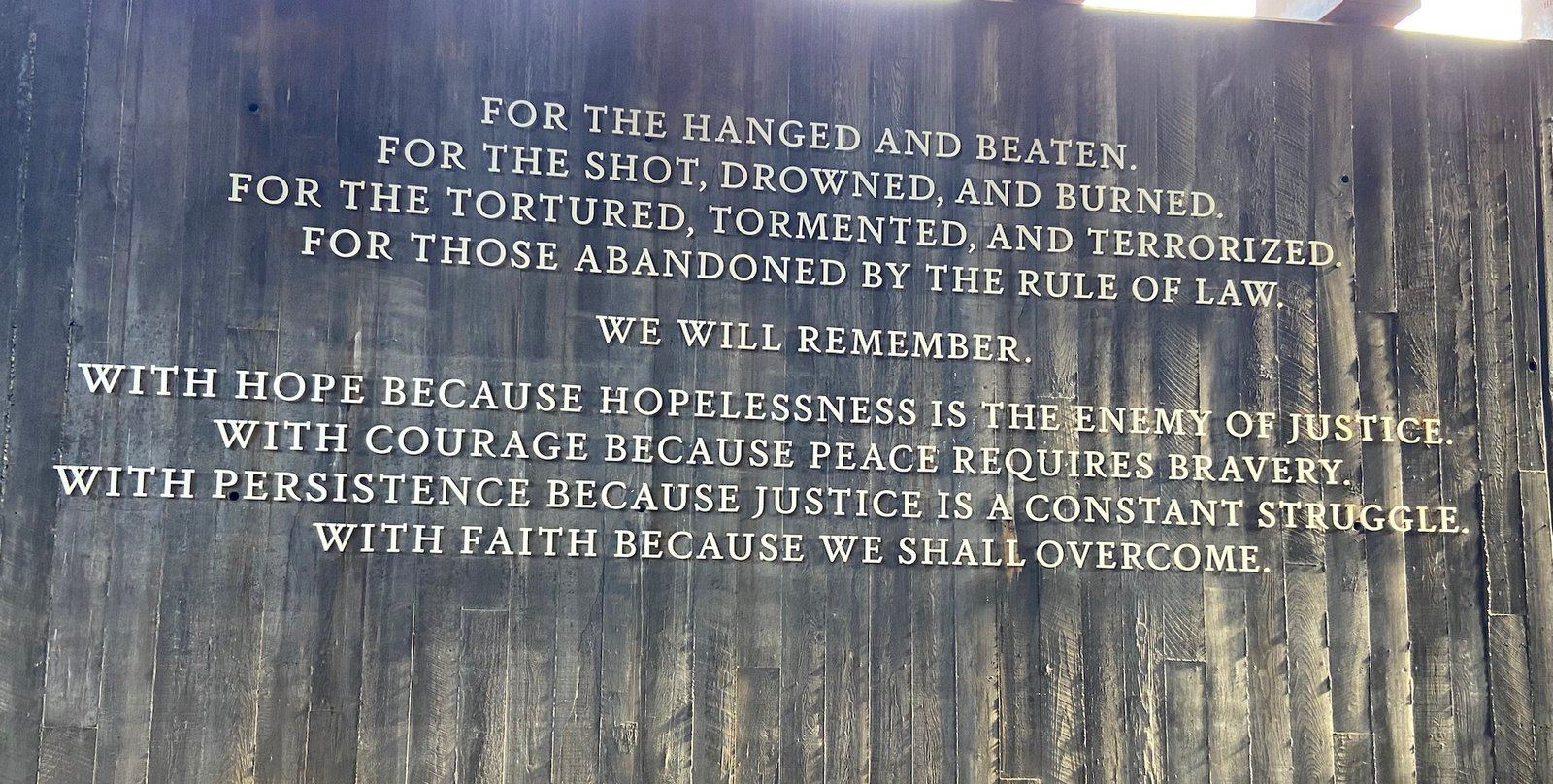
My wife and I recently visited Montgomery, Alabama. We spent most of a day exploring the Equal Justice Initiative’s Legacy Museum and National Memorial for Peace and Justice. It was a hard day. It was an intense day. It was also a day full of truth, learning, and reflection on our country, past, and future. I highly recommend it. The image at the top of this post is from the Memorial.
If you do, you’ll learn the details that many of us don’t like to think about. You’ll learn about Emmett Till, sure, and the Tulsa massacre, but you’ll also learn about a system that was much more ingrained and systemic than we were taught. Emmett Till wasn’t murdered as a result of a handful of out-of-control white men. Those white men weren’t found not guilty by a jury of other people who just happened to be racist. That murder went unpunished because it was one of hundreds, if not thousands, of similar crimes. Crimes that were not done in secret and hard to prove, but in some cases, lynchings that were announced in the newspaper, attended by up to 10,000 people, and where souvenirs were sold. Yet only 1% of these crimes ended up being prosecuted.
If you do, you’ll also learn about the history of slavery and the mass incarceration of black males that continues through today. You’ll learn about the number of lynchings and racially-based murders that occurred not just in the South but in places like Ohio, Oregon, Minnesota, etc.
Most of all, what I walked away from our day was a reminder of what it can look like when we dehumanize a group of people. When we see others as less than human, what do we allow to happen to our fellow human beings? We allow lynching, we allow a 14-year-old boy to be sentenced to death, and we celebrate the murder of others without a trial or chance to defend themselves. Because they are not us. They are one of “them.”
In that same respect, I also learned of another person who lost their mother just before the holidays. She was incarcerated. She, very likely, was not provided medical care and died from pneumonia after asking for medical care for days prior. This event reminded me of how little progress we’ve made. She wasn’t black. But she was in prison. I’ve written a number of times about what happens to people in prison when they have mental health needs. They are often ignored. They are less than. Society doesn’t care about the lack of mental health care in prison, nor the lack of physical health care in prison. The only label they are given is “criminal.” They aren’t fathers, mothers, sons and daughters, or people. They’re just criminals who get what they deserve. We want them out of our sight and forgotten, so if they happen to die, there is no loss unless it was your mother, of course.
When I think of the famous speeches of Dr. King, I am always reminded of this fact. We have always seen certain groups of people as less deserving of the rights we willingly claim for ourselves. Be it blacks, immigrants, prisoners, those with mental health struggles or disabilities, members of the LGBTQ community, or addicts, it is far too easy to look at them with judgment and disdain. Maybe even fear. They’re different than me. What happens to them is not my concern. They probably brought it on themselves anyway.
Those are all too easy to say. The hard work is in looking at people who are different from us, who live different lives, make different choices, and recognize our common humanity. That’s what Dr. King was talking about. Not being blind to our differences but being aware that we are all human and deserve respect based on that. So when a black man is lynched, or a prisoner dies from a lack of medical care, or someone struggling dies from suicide without access to mental healthcare, or because their own family won’t accept them for who they are, we fail as a society. We fail to see human life as human life.
We fail every time we look at another human being and refuse to see them. We allow horrible acts to occur when we fail to see the victims of those acts as fully human.
We rationalize, and we excuse, but in the end, we fail. Not because we don’t know better but because we don’t care enough about people who aren’t like us.