How Trauma is Like Living Behind a Wall of Water
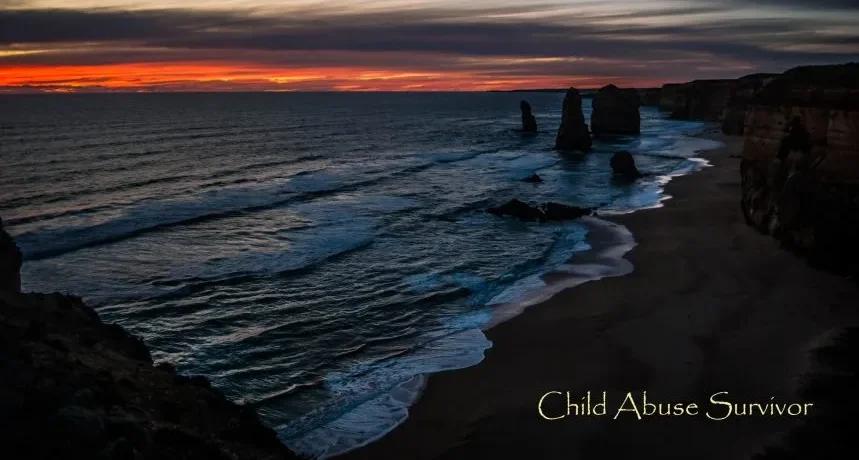
 I recently posted this photo to my photo blog, and as I looked at it, a thought occurred to me.
In context with the other photos I shot that day, I know exactly where it was taken, but without that context, it could really be anywhere. Now, if you go to the blog and look at the tags and categories, you might get a decent idea of where it was taken. Then you could probably zoom in and get a little more context, and you could probably guess where it is, but if you look at the photo by itself, it’s just a wall of water.
Often, we get asked to describe what growing up with abuse or dealing with depression is like by those who have never had that experience. As I look at this photo, I want to say to those people, “Here, look at the photo and tell me what you see?”
What you see is water spouting in a fountain, and some vague things behind it. That is a pretty good description of what the world looks like to a child abuse victim or someone suffering from depression. You can’t see the world beyond the wall of water. It might as well not be there as far as you are concerned, because you have to deal with the water that is right in your face. So you learn to act accordingly.
Think about how that would play out in everyday situations. If the only thing you could see were a wall of water, you’d probably spend every minute of every day simply trying not to drown. For everyone else, who can see around the fountain and knows that you are actually standing on solid ground, and if you just took a step or two to the side, you would see that too, our actions don’t make any sense. That’s true, but depression and abuse rob you of that perspective. We are surrounded by water, the entire world is water, and it is going to engulf us. There is no “seeing around it”; it’s everywhere in our minds.
Please understand two things:
- If you feel like the world is all water, know that it isn’t. That is your trauma and your depression lying to you. Eventually, you will see the landscape beyond the water.
- If you know someone else who can only see the water, be patient with them. Understand that the iconic scenery beyond this photo doesn’t exist for them. Yes, they will see it eventually, but don’t rush it. When they do see it, they will appreciate the people who stuck with them all the time they couldn’t, and will be overjoyed to walk into it with you.
So the next time someone seems to be having trouble understanding what the world looks like to someone dealing with trauma and/or depression, just share this photo with them and ask them to tell you what’s behind the fountain.

RT @SurvivorNetwork: How Trauma is Like Living Behind a Wall of Water: I recently posted this photo to my photo blog, and as I looked… ht…
Jo Heath liked this on Facebook.
Kathleen Esslemont liked this on Facebook.
Jo Jones liked this on Facebook.
How Trauma is Like Living Behind a Wall of Water https://t.co/pT3YhhYXak
RT @SurvivorNetwork: How Trauma is Like Living Behind a Wall of Water https://t.co/pT3YhhYXak
RT @SurvivorNetwork: How Trauma is Like Living Behind a Wall of Water https://t.co/pT3YhhYXak
RT @SurvivorNetwork: How Trauma is Like Living Behind a Wall of Water https://t.co/pT3YhhYXak
Angela Netherland McBride liked this on Facebook.